Wednesday, October 2, 2013

Blog 7: Independent Component 1 Approval

1.  Describe in detail what you plan to do for your 30 hours.

For my 30 hours, I plan on continuing to mentor at my local fire station and doing any tasks they require me to do. I would be able to meet every weekend for approximately 4-5 hours. I'd be expanding my knowledge on the topic of firefighting mostly by becoming familiar with basic fire techniques which we usually learn there. These techniques range from topics such as hose lay evolution, ladder techniques, the proper us of fire fighting tools and equipment, and many other fire fighting skills. I'm eager to learn about anything fire related that my mentor, or post leader, has in store for the other explorers and I. The topics we are taught often overlap week after week, since many are skills that we have to master through hands on activities.  All these skills are basic techniques that, although may be simple to learn, are hard to perfect and master. I plan on doing any tasks that are required of me during my explorers program and also hopefully becoming an expert on as many of these subjects as I possibly can by completing these 30 hours. 

2.  Discuss how or what you will do to meet the expectation of showing 30 hours of evidence.

I plan on recording everything that I do for this independent component by accurately filling out my hours log. I will also ask my mentor to write me a letter that confirms my attendance. Aside from that I will also be keeping any handouts that we receive and making copies of them in order to store them aside for this specific component. Lastly, I plan on taking as many pictures as possible in order to completely justify my 30 hours of work. I feel that taking photographs is probably the best way of showing evidence because someone can't just create a fake picture and have it pass as evidence. 

3.  And explain how what you will be doing will help you explore your topic in more depth.

Continuing to attend my fire explorer meeting will allow me to explore my topic more in depth by helping establish me for future success. Every piece of information that we receive is used in one way or another and is eventually applied to the real world. I would also get to learn more about firefighting by simply being exposed to other firefighters and observing the way they work. Learning the basics of firefighting will eventually aid me in truly understanding the much more complex aspects of this job, which I plan on doing in the near future. 

4.  Post a log on the right hand side of your blog near your mentorship log and call it the independent component 1 log.

Done.

Monday, September 30, 2013

Additional Post One: S.C.B.A.

Since I have joined the fire explorers program this summer I have learned many new things. Our post tends to focus on a different topic of firefighting each month (sometimes week). For the month of September the other explorer and I focused the majority of our time learning about SCBAs (self-contained breathing apparatuses).

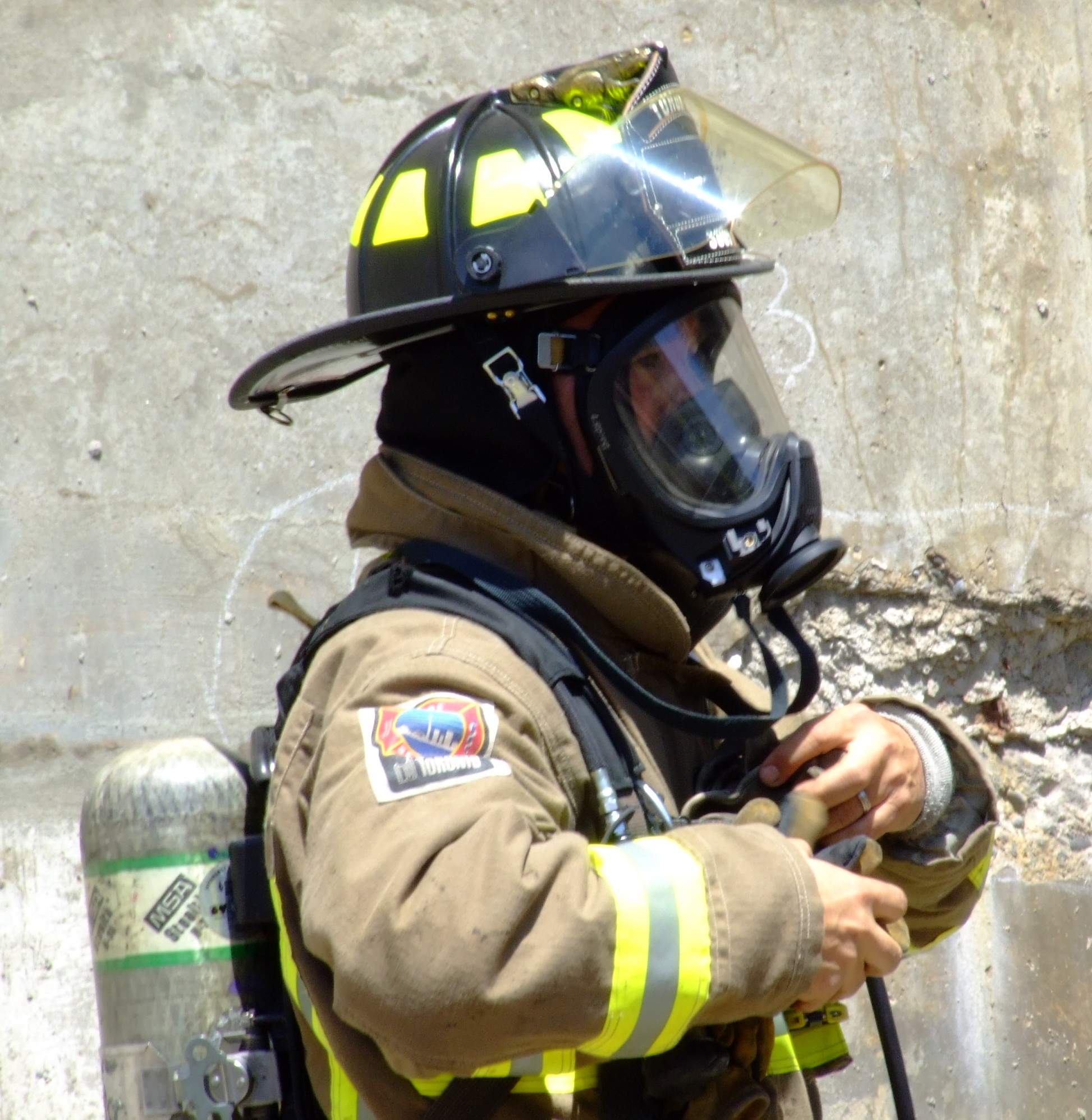
The image above shows a firefighter wearing a SCBA.

The purpose of a SCBA is to provide compressed air to firefighters in an IDLH (immediately danger to life or health) atmosphere. I have learned the 8 major components of a SCBA, how to properly care for and inspect a SCBA, and the 3 most common ways of donning a SCBA.

There are 8 major components that make up a SCBA. These components include:
The image above shows a SCBA.


    1. Air Cylinder
    2. Facepiece
    3. Voice Projection Unit
    4. Backpack Harness and Frame
    5. Integrated PASS Device
    6. Air Gauge/Alarm
    7. 1st Stage Regulator and hose
    8. 2nd Stage Regulator 

*Firefighters are expected to inspect their SCBAs daily at the start of each shift and after each use.
  • They also have to test their SCBA at least once a week to make sure that every component is properly functioning. 

Aside from learning the parts of a SCBA and when to care for it, we also had to learn how to don a SCBA. There are 3 proper methods of donning a SCBA.
  1. The first method is known as the Overhead Method.
    1. This method of donning the SCBA is called the overhead method because when you are initially putting the SCBA on you have to throw the bottle over your head in order for the backpack harness/frame to slide down your back. 

  1. The second method is known as the Sling Method.
    1. This method of donning the SCBA is called the sling method because when you are initially putting the SCBA on you have to grab a strap with one hand and sling it onto the opposite shoulder.

  1. The third method is known as the Crosshand Method.
    1. This method of donning the SCBA is called the crosshand method because when you are initially putting the SCBA your hands are cross over one another. 

*After learning the three methods of donning a SCBA we had to practice putting them on so that it takes no longer than 1 minute. 

Overall, an SCBA is an extremely useful piece of equipment that is used often by firefighters, which is why it is so important that firefighters know every part of it. 


Tuesday, September 17, 2013

Blog 6: Second Interview Questions

Content: 

1. Justin Cunningham / L.A. County Fire Department 

2. I plan on asking my mentor questions that will help me justify him as an expert in his topic. These questions include:

  • Can you tell me a little about yourself and your work experience?
    • How long have you been working on the job?
  • What can you tell me about about the L.A. County Fire Department?
    • Did you always want to work for L.A. County?
  • What are some jobs that you had prior to becoming a firefighter which helped you become one?
  • What are some programs or events that you choose to partake in  which helped you reach your career?
  •  When did you know that you wanted to become a firefighter? 
  • What did you have to do in order to become a firefighter? 
  • How did you physically and mentally prepare yourself for becoming a fireman?
  • In what way has this career effected your life?
  • What do you have to do, and what do you do, in order to be the best firefighter you can possibly be?
  • How would you plan on further expanding your knowledge related to this topic?

Sunday, September 8, 2013

Blog 5: Project Reflection and Working EQ

1. Positive Statement: What positive thing happen as a result of what you have completed so far?  

After completing my summer mentorship and findings an extensive amount of research I have been able to learn more than I would have ever imagined about the fire department. I have met many people who work and aspire to work for the fire department simply through completing my mentorship hours. That experience alone has also given me the opportunity to work hands on with other firefighters as they tough me vital information which they use on a daily basis, such as throwing ladders onto buildings and properly using their safety equipment. Although I would have to say that the majority of the positive things that have happened so far have come from completing my mentorship hours, I don't want to undermine the importance that finding research has had on me. Researching has allowed me to learn about several different aspects of firefighting, such as health, safety, and work life. All these positive outcomes that have arisen so far have had a big impact in my life, seeing as the new stuff that I have learned will help me forever.  

2. EQ Content: Pick a piece of research or your interview. How has it helped you improve your understanding of your topic?  

After reading "The Importance of Staying Hydrated" by Aaron Zamzom I was able to get a small glance at a minor hardships that firefighters are faced with, hydration. Although hydration plays a huge role in a firefighters life, many ignore its importance. It helps keep their bodies functioning properly and it protects them from several other heath conditions, such as heat cramps, heat exhaustion, and even heat strokes. At first I thought that this article was going to be of no use, and to be honest I only got it because it seemed amusing, but after reading it I knew that I was wrong. This article was filled with several facts from reliable sources such as the World Health Organization and it was really helpful because it helped me understand the importance that hydration plays on a firefighters life.  

3. What has worked for you so far in the senior project?  

Although there have been ups and down throughout this senior project, a common work habit that I have found to be beneficial so far has been the use of my resources. Being able to go the local library whenever a research check I coming up has been a great help considering that at first I couldn’t find any reliable information on firefighting. Aside from the library, being able to talk to other firefighters while I attend fire explorer meetings has also been a helpful experience because they help clarify any confusion that I may have on a certain topic.  

4. What hasn't worked so far?

  The biggest problem that I have faced throughout this senior project is focusing on one aspect of firefighting. I am continuously changing my mind and don’t know whether I should focus on structure fires, brush fires, hazmat, or medical calls. This indecisiveness has made me get a lot of information which I have not been able to apply to my life, which I find really disappointing.

  5a. What is a potential question you would like to study this year? (working EQ)  

What is the most efficient way to get a group of firefighters to work together under extreme levels of stress? I would deconstruct that essential question by defining the words efficient, firefighters, and stress. With my current knowledge I would probably answer the question by saying that a group needs to have good team work, be effective communicators, and trust one another.   What is the most effective way to put out a structure fire? I would deconstruct that possible essential question by defining the words effective and structure fire. I find this question to be a bit more interesting than the first one because I really don’t know how to answer it and it would require some true research and learning on my part.  

5b. What do you plan to do for mentorship? If you haven't found a mentor yet, then discuss where you are currently looking and who you are talking to find it.

  For my mentorship I plan on trying to attend the fire explorer academy, which will eventually let me go on rides with firefighters when they’re on calls. If that doesn’t work I will probably continue to attend my traditional explorer meetings which are held every weekend.

Monday, August 26, 2013

Blog 4: Interview Preparation

1.  Who do you plan to interview?  Why?

 I plan on interviewing my oldest brother who has been a working firefighter for approximately 7 years. I have chosen to interview him because he has a lot of work experience and seems to be very passionate about his job.

2.  You have to ask 5 questions.  What additional questions do you plan to ask?  Ask open-ended questions.

I plan on asking my interviewee questions such as:


  • When and why did you first decide to become a firefighter?
  • What are some things that you like/dislike about your profession?
  • What is the most common thing you do as a firefighter? 
  • When factoring the good and the bad, overall, how do you like your job? 
  • Would you recommend this job to others? 

*If the opportunity presents itself, I also plan on asking follow up questions based on the information that I will have been given. Some follow up questions would include:


  • Why do you think many people want to join in this profession?
  • What is the strangest thing you have had to do while working? 
  • Exactly why would/wouldn't you recommend this job to others?


Wednesday, August 21, 2013

Blog 3: Topic Choice and Semester 1 ESLR Goals

1. Topic: Firefighting

2. Effective Learner: For this ESLR category I plan to show growth as the year progresses by focusing on improving my productiveness while at school. I could do this by not talking to my peers in class, which I tend to do, and by trying to avoid getting distracted by others. This could also lead me to focusing more on my work and getting a proficient in all my classes. Bring all my materials to school , such as a calculator or a silent reading book, and complete all my assignments on time, such as my source checks or blog assignments, is how I plan to show growth in this category.

Effective Communicator: For this ESLR category I plan to show growth as the year progresses by working on improving my communication skills. I plan to do this by paying more attention in class and raising my hand more often  in order to avoid unnecessary interruptions. I could also express my thoughts and opinions in a more clear, respectful manner. Lastly, I plan to improve in this category by helping my future groups in doing things such as keeping everyone relaxed and on the same page when discussing group projects.

Effective User of Technology: For this ESLR category I plan to show growth as the year progresses by incorporating technology into my daily school routine. I plan to achieve this by doing simple things such as using a power point or short video when presenting. Aside from that, I wish to ask others for help when in need but also help my peers when they need me expertise. Lastly, I plan to improve in this category by effectively finding research , which I plan on doing by using a computer or mobile device.

Effective I-Poly Citizen: For this ESLR category I plan to show growth as the year progresses by being a responsible person. This could be done by staying aware of my actions, such as being late to class or accepting the grade that I have earned that semester. Aside from that, freely volunteering at school events ,such as Scare Fare or ifest, is how I plan to show growth in this category.


Tuesday, August 13, 2013

Blog 2: Summer Mentorship

Literal:  

1. Summer log (click link below):


2. Firefighter Cunningham / Cell: (310)866-1395

3. Some questions that were raised because of this experience include:
  • Realistically speaking, what is the youngest age that a person can get hired by a fire department in these competitive times?  
  • What activities can I take part in that would help improve my chances of becoming a firefighter?
  • How vast are the topics which firefighters are required to learn about? 
  • Are there different types of fire academies? If so, what are they?

Interpretive:

4.  Through completing this assignment I have gained a different view towards the fire department. At first I thought that all firefighters did was extinguish flames and save cats from trees, but now I know that they do much more than that. They help provide care to the people of their community by responding to all sorts of calls, some more severe than others. My respect for the department has also grown because I now have a deeper understanding of what it actually takes to work for them. It takes a lot of will power, dedication, and hard work to be part of the department, nothing near to what I had originally expected. Overall, this experience has helped open my eyes and see that becoming a firefighter will not be a walk in the park. 
  
Applied
    
5. This assignment helped me choose my topic (firefighting) because I now know that this field truly interest me. I found that firefighters learn about most of the things that surround us. I like being able to apply my learning to the real world, an example being roofs. On my first day at the explorers program I learned that you can tell a lot about how a home is designed by just observing its roof. I also enjoyed being able to learn and use different types of tools that may seem alien like to others. An example being when I first used a self contained breathing apparatus. This piece of equipment helps firefighters breath in burning buildings. I really like how I not only got to learn how to use this tool, but I also received information regarding all the little parts that make this equipment one. It is the little things that I obtained from completing this assignment that helped me choose my topic.